



2026 // Week 1 – Vietnam Pepper Market : The Evolving Landscape
Domestic Prices and Initial 2026 Outlook
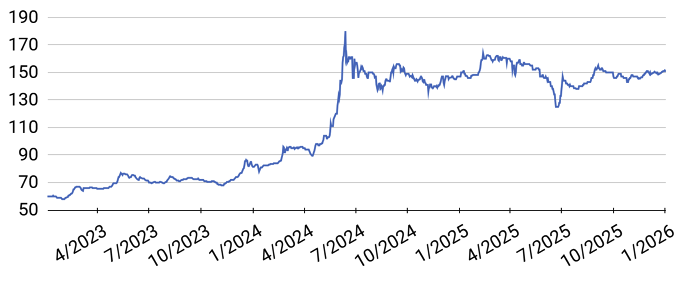
Pepper price developments in the Central Highlands and Southeast from First 2023 to 05 Jan, 2026 (Unit: VND/kg)
As of early January 2026, domestic pepper prices are ranging between VND 153,000 and VND 154,000 per kilogram. The first week of the new year saw mixed movements across various localities, reflecting a dynamic and somewhat uncertain market environment.
Pepper farms are currently in the crucial phase of preparing for the upcoming harvest season, which is traditionally anticipated to commence in late February 2026. This period is vital, as it sets the stage for the year’s yield and overall market supply.
However, the industry faces significant concerns. Unstable weather patterns experienced throughout the past year have cast a shadow of doubt over potential production volumes. Farmers are grappling with the consequences of these climatic shifts, which could lead to notable impacts on harvest outcomes.

Supply and Production Risks
Temperature Fluctuations
A local farmer highlighted the severe impact of large day-night temperature fluctuations on pepper plant growth. This erratic weather has caused widespread leaf and branch shedding, significantly jeopardizing the upcoming harvest.
Risk of Crop Loss
In previous years, this farmer’s household typically harvested around 1.5 tons. However, with the current situation, there is a high risk of total crop loss, forcing many to focus solely on plant care and recovery for future seasons.
Critical Growth Stage Impact
Field surveys confirm that prolonged cold winds and low nighttime temperatures have caused severe leaf drop in several pepper gardens, particularly in coastal areas like Vĩnh Hoàng and Cửa Tùng. This phenomenon is occurring precisely during the critical flowering and early fruit-setting stage, which directly determines overall yield.
The environmental challenges underscore the vulnerability of traditional farming practices and emphasize the urgent need for adaptive strategies and climate-resilient crop management.
Vietnam’s Pepper Exports: Value Over Volume
According to the Import-Export Department of the Ministry of Industry and Trade, Vietnam exported approximately 240,000 – 245,000 tons of pepper in 2025.
While this represents a slight 3–5% decline in volume compared to previous peak periods, the overall export performance paints a more positive picture in terms of value.
Export revenue reached nearly USD 1.6 – 1.65 billion, marking a significant increase of over 20% year-on-year. This impressive growth was primarily driven by two key factors: a sharp improvement in average export prices and a higher proportion of high-quality and value-added processed orders.

The shift towards higher-value products indicates a strategic move within the industry to capitalize on premium segments, mitigating the impact of reduced export volumes and securing greater financial returns.
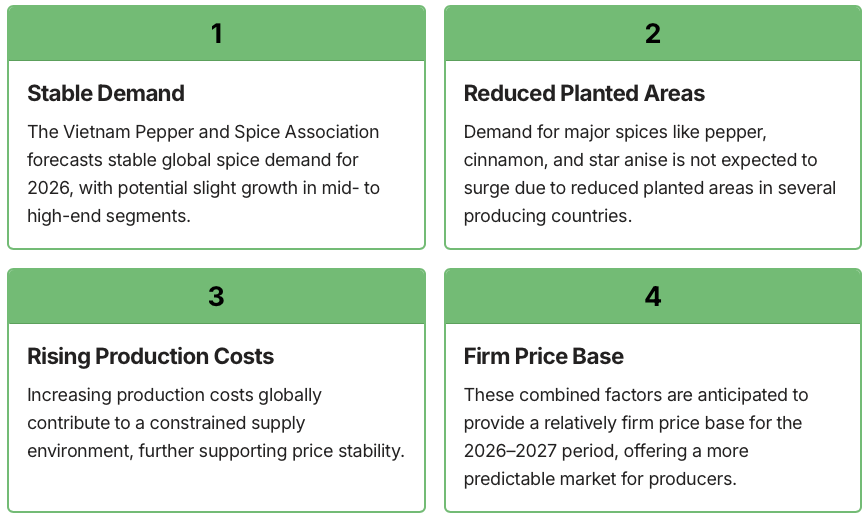
Global Spice Demand & Price Stability for 2026-2027
Structural Industry Shift: Quality, Traceability, and Value Addition
The global market is increasingly tightening requirements on quality standards, traceability, and sustainability. This shift poses a significant challenge and opportunity for Vietnamese pepper businesses.
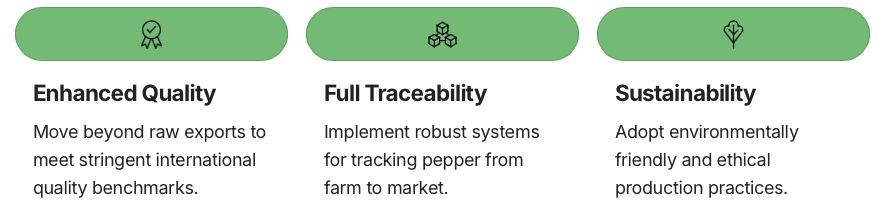
Companies relying solely on raw exports, intermediaries, and price-based competition face a growing risk of being excluded from global supply chains. To thrive in this new environment, spice businesses need to make structured investments:
- Invest in certified raw material zones to ensure consistent quality and ethical sourcing.
- Focus on deep processing to create high-value products that meet niche market demands.
- Build strong brands that resonate with consumers who prioritize quality, sustainability, and origin.
By prioritizing these strategic imperatives, Vietnam’s pepper industry can fully leverage the new price environment, improve profit margins, and secure a sustainable competitive advantage, moving beyond mere volume growth to achieve lasting value.