


2026 // Week 14 – Vietnam Pepper Update: Vietnam’s Labor Shortage Threatens Peak Production
Price Movement and Harvest Acceleration
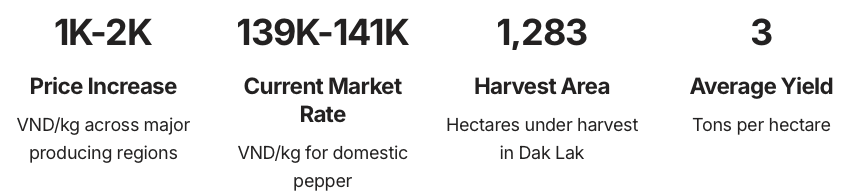
A perfect storm of market pressures and workforce depletion is confronting Vietnam’s pepper industry during its critical harvest season. As domestic pepper prices climbed 1,000–2,000 VND/kg to reach 139,000–141,000 VND/kg across major producing regions, farmers in Dak Lak Province face an unprecedented challenge. While favorable dry weather has accelerated the harvest timeline, the province’s 1,283 hectares of pepper plants are ripening simultaneously—creating a narrow window that demands massive coordinated labor.
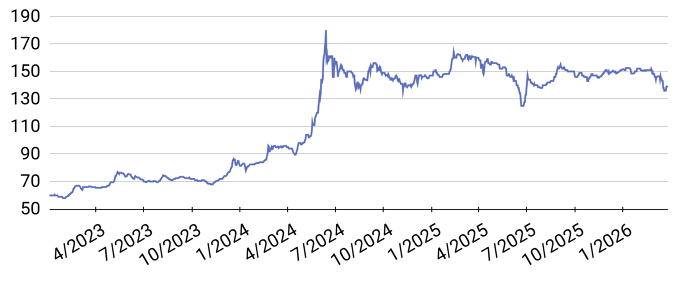 Pepper price developments in the Central Highlands and Southeast from First 2023 to 30 Mar, 2026 (Unit: VND/kg)
According to Dak Lak Online Newspaper, the province’s pepper harvest has entered its peak period, with farmers capitalizing on dry weather conditions to accelerate harvesting, drying, and processing activities. The price increase reflects both market demand and the compressed timeline forcing farmers to prioritize rapid market delivery. However, this acceleration depends entirely on labor availability—precisely the resource that has become critically scarce.
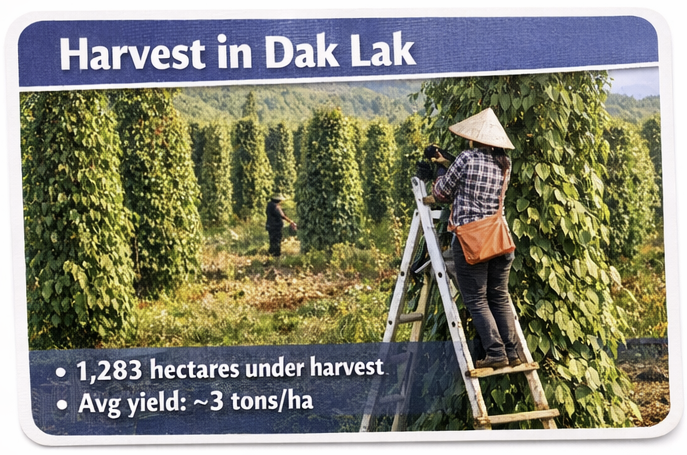
Mr. Y Ngon Nie, Chairman of the People’s Committee of Ea Ktur Commune, confirmed the commune’s 1,283 hectares are now under harvest, with yields averaging approximately 3 tons per hectare. The challenge lies not in the volume but in the simultaneity: pepper plants ripen together, creating a sudden spike in labor demand that regional workforces cannot meet. Local authorities have attempted to address this through worker connection lists, but these administrative measures cannot overcome the fundamental demographic shift away from agricultural work.
The Labor Crisis Deepens
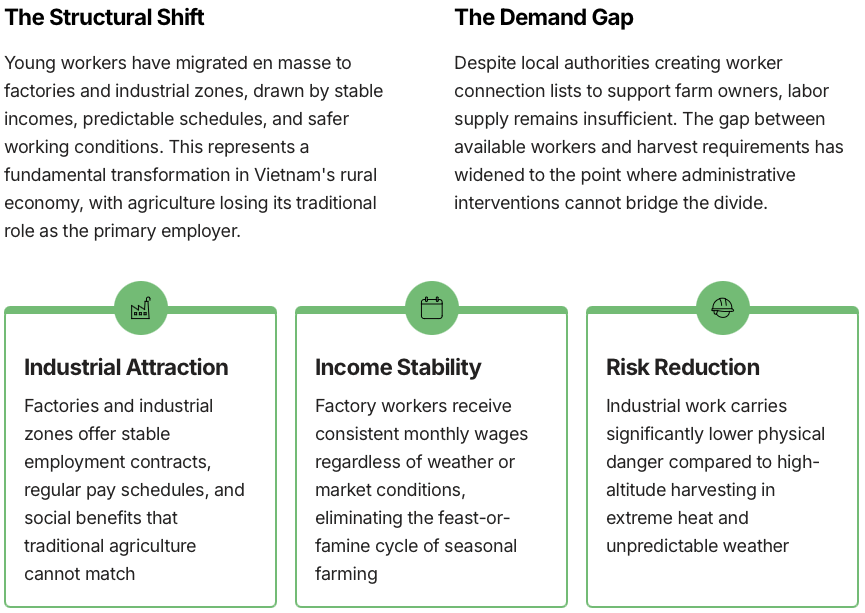
The labor shortage creates cascading consequences throughout the harvest cycle. If harvesting is delayed, ripe pepper berries fall from branches, directly reducing yields and marketable product. More insidiously, prolonged fruit retention under hot weather conditions weakens pepper plants at the physiological level, diminishing their productivity for the next growing season. Farmers face a brutal calculus: accept immediate losses from unharvested berries or risk compounding damage to their long-term investment in pepper cultivation.
Dangerous Work, Production Risk
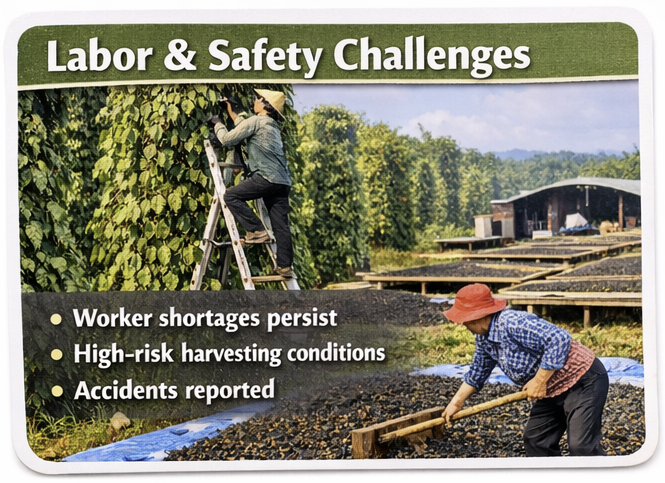
Pepper harvesting represents one of the most hazardous agricultural occupations in Vietnam, combining extreme physical demands with serious safety risks. Harvesters work at significant heights on ladders or scaffolding, often under intense heat, while battling sudden strong winds that can destabilize their platforms. The work requires maintaining balance while reaching for clusters of ripe berries, often in awkward positions that strain muscles and compromise stability.
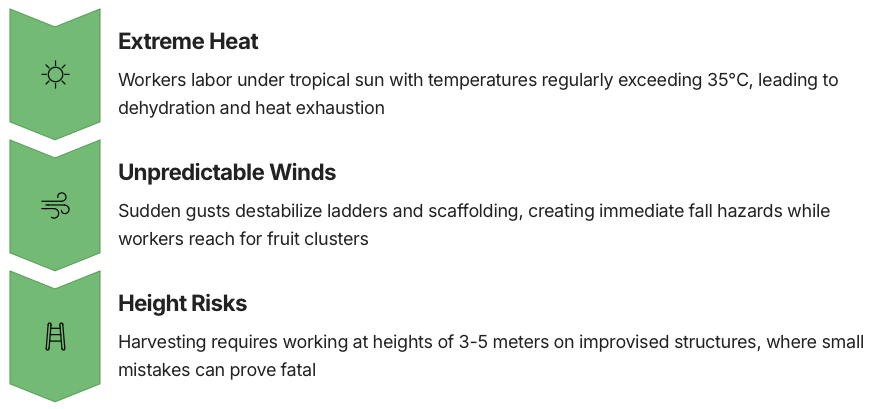
“The physically demanding and high-risk nature of pepper harvesting discourages workers from participating. In recent years, several incidents involving falls from ladders have been recorded in the province, causing severe injuries and posing life-threatening risks.”
The physical toll extends beyond immediate accidents. Repetitive reaching motions while balanced at height cause chronic musculoskeletal injuries, particularly in shoulders, backs, and knees. Workers often lack proper safety equipment, using makeshift harnesses or none at all due to cost constraints. The combination of heat stress, physical exhaustion, and fall risks makes pepper harvesting one of the least attractive options in Vietnam’s agricultural sector—particularly for younger workers who have alternative employment choices.