


2025 // Week 19 – Vietnamese Pepper Market: Current Prices, Harvest Trends, and U.S. Tariff Impact
Current Pepper Price Trends in the Vietnamese Market
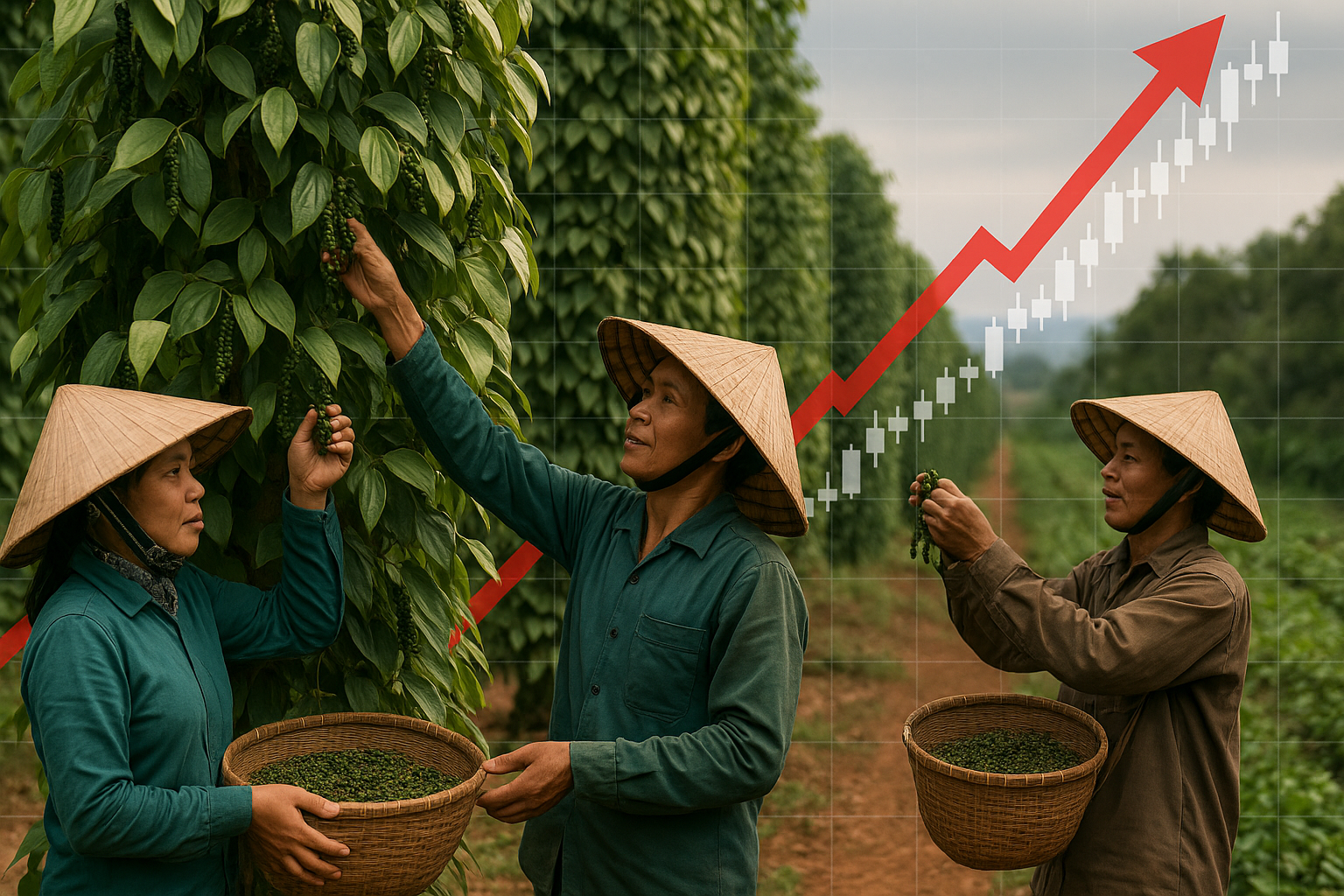
Current domestic pepper prices in Vietnam are holding strong at 157,000 to 158,000 VND/kg, demonstrating remarkable resilience in the agricultural commodity market. This price point represents a continued upward trajectory that has been observed since the commencement of the harvest season. The sustained price increase can be attributed primarily to the cautious selling approach adopted by farmers, who are strategically limiting supply to maintain favorable market conditions.
A minor market correction was observed following the April 30th holiday week, with prices decreasing by approximately 500 VND/kg in regions traditionally associated with lower pricing structures, specifically Gia Lai and Dong Nai provinces. However, market analysts and industry experts anticipate this to be a temporary adjustment rather than an indication of a downward trend. The forecast suggests that increased trading activity in the coming weeks will likely contribute to a price rebound, reinstating the upward momentum that has characterized the market in recent months.
Post-Harvest Season Dynamics and Farmer Behavior
Vietnam’s pepper harvest season has effectively concluded across the major growing regions, marking a transition to the post-harvest period where cultivation practices shift significantly. Farmers are now entering what is colloquially referred to as the “resting phase” for their pepper gardens, an essential agricultural practice that allows the vines to recuperate and build strength for the subsequent growing cycle. During this period, farmers focus on rejuvenation activities including pruning, soil enrichment, and targeted fertilization designed to enhance plant health and future productivity.
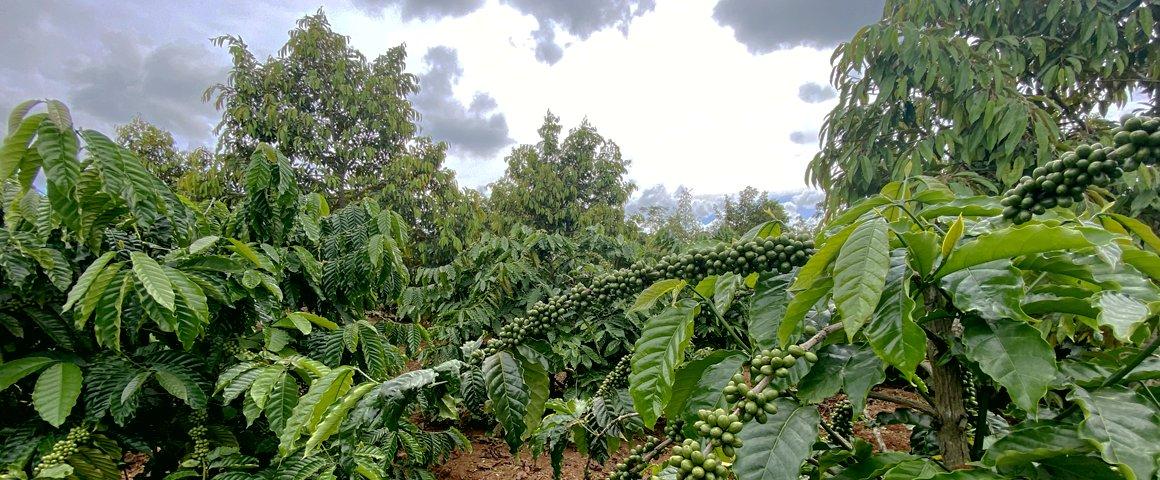
A notable trend emerging this season is the diversification of agricultural activities among pepper farmers. Many producers, particularly in the Central Highlands region, are simultaneously harvesting alternative crops such as durian and coffee, both of which are commanding favorable market prices. This agricultural diversification serves as an effective risk management strategy, providing supplementary income streams that reduce the financial pressures typically associated with single-crop dependency.
The reduced financial pressure resulting from crop diversification has contributed significantly to farmers’ ability to withhold pepper stocks rather than selling immediately post-harvest. This strategic inventory management by farmers collectively influences market supply dynamics, helping maintain price stability even as the harvest season concludes. The psychological and financial freedom afforded by alternative income sources enables more patient, strategic market participation, fundamentally altering traditional harvest-time selling patterns.
U.S. Market Demand and Long-Term Export Prospects
According to comprehensive market intelligence from the Vietnam Industry and Trade Information Center (VITIC), operating under the Ministry of Industry and Trade, demand from the United States market remains exceptionally robust. This is particularly evident in the substantial increase in long-term purchase orders for delivery scheduled in the third and fourth quarters of 2025. This extended forward contracting represents a significant vote of confidence in the stability of Vietnam’s pepper production capabilities and quality standards, while simultaneously reflecting growing concerns about potential global supply constraints in the coming years.
The willingness of U.S. importers to secure supply commitments well in advance indicates a strategic shift in procurement practices, likely driven by forecasts suggesting tightening global pepper inventories. These forward-looking contracts provide valuable market signals about anticipated supply-demand imbalances that may emerge in the 2025-2026 market cycle. However, despite this strong demand indicator, many Vietnamese export companies are demonstrating remarkable restraint in their approach to these long-term contracts.
Export firms are increasingly hesitant to commit to extended fixed-price agreements, with many either declining such arrangements entirely or negotiating flexible pricing mechanisms that allow for upward adjustments. This cautious approach stems from widespread industry projections that anticipate continued price appreciation throughout 2025 and 2026, driven by structural supply constraints and growing global consumption. By limiting long-term fixed commitments, exporters are positioning themselves to capitalize on potentially higher future market prices, even at the cost of guaranteed volume commitments.
Potential Impact of U.S. Countervailing Tariffs
The proposed implementation of a 46% countervailing duty by the United States presents a significant challenge to Vietnam’s pepper export industry. As one of Vietnam’s largest pepper importers, the U.S. market represents a critical export destination that has historically provided reliable demand and price stability. The imposition of such a substantial tariff would fundamentally alter the competitive dynamics for Vietnamese exporters in this key market, potentially triggering far-reaching consequences throughout the industry’s value chain.
The primary and most immediate impact would be a substantial reduction in price competitiveness for Vietnamese pepper in the U.S. market. The effective export price would increase dramatically, creating a significant price gap compared to competing origins not subject to similar tariffs. This would particularly benefit Brazilian exporters, who represent Vietnam’s main competition in the global pepper trade. The price disadvantage could initiate a cascading effect of market share erosion, with U.S. importers potentially pivoting to alternative sources to avoid the tariff-inflated pricing of Vietnamese product.
Beyond the direct impact on export volumes and values, there are already visible ripple effects in domestic raw material markets. Local pepper prices have shown preliminary signs of downward pressure following the announcement of the potential new tariff policy. This market reaction demonstrates the interconnectedness of international trade policies and domestic agricultural markets, with pricing signals rapidly transmitting through the value chain. If implemented as proposed, the tariff could substantially depress farmgate prices, impacting producer livelihoods and potentially triggering reduced investment in future production capacity.
Strategic Responses to Market Challenges
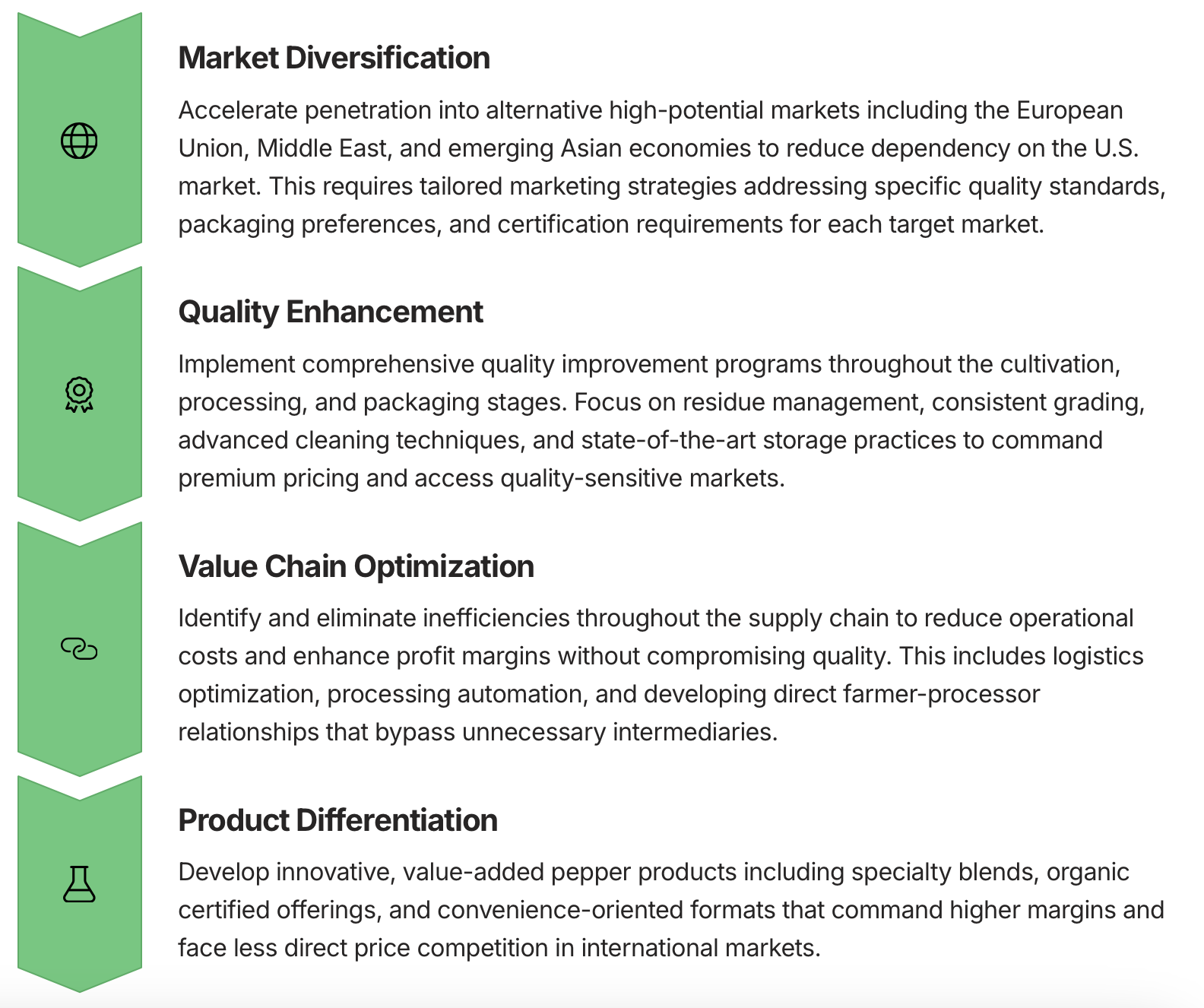
Industry experts have outlined a comprehensive set of strategic responses that Vietnamese pepper stakeholders should consider implementing to navigate the complex challenges presented by changing market dynamics and potential trade barriers. These strategies focus on market diversification, quality enhancement, and value chain optimization to ensure sustainable competitiveness in a rapidly evolving global marketplace.