


2026 // Week 21 : Vietnam Pepper Market: Bullish Momentum Builds
Market Snapshot and Price Forecast
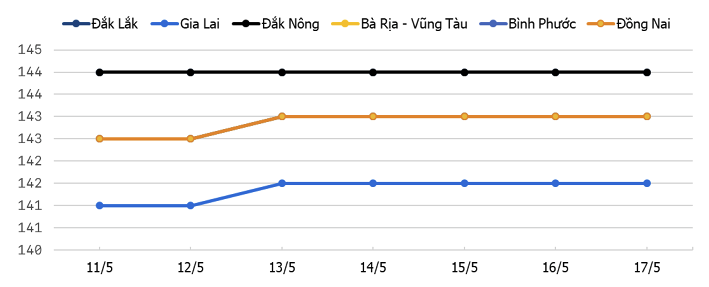
Pepper price trends in the Central Highlands and Southeast regions
during the week of May 11th to May 17th, 2026
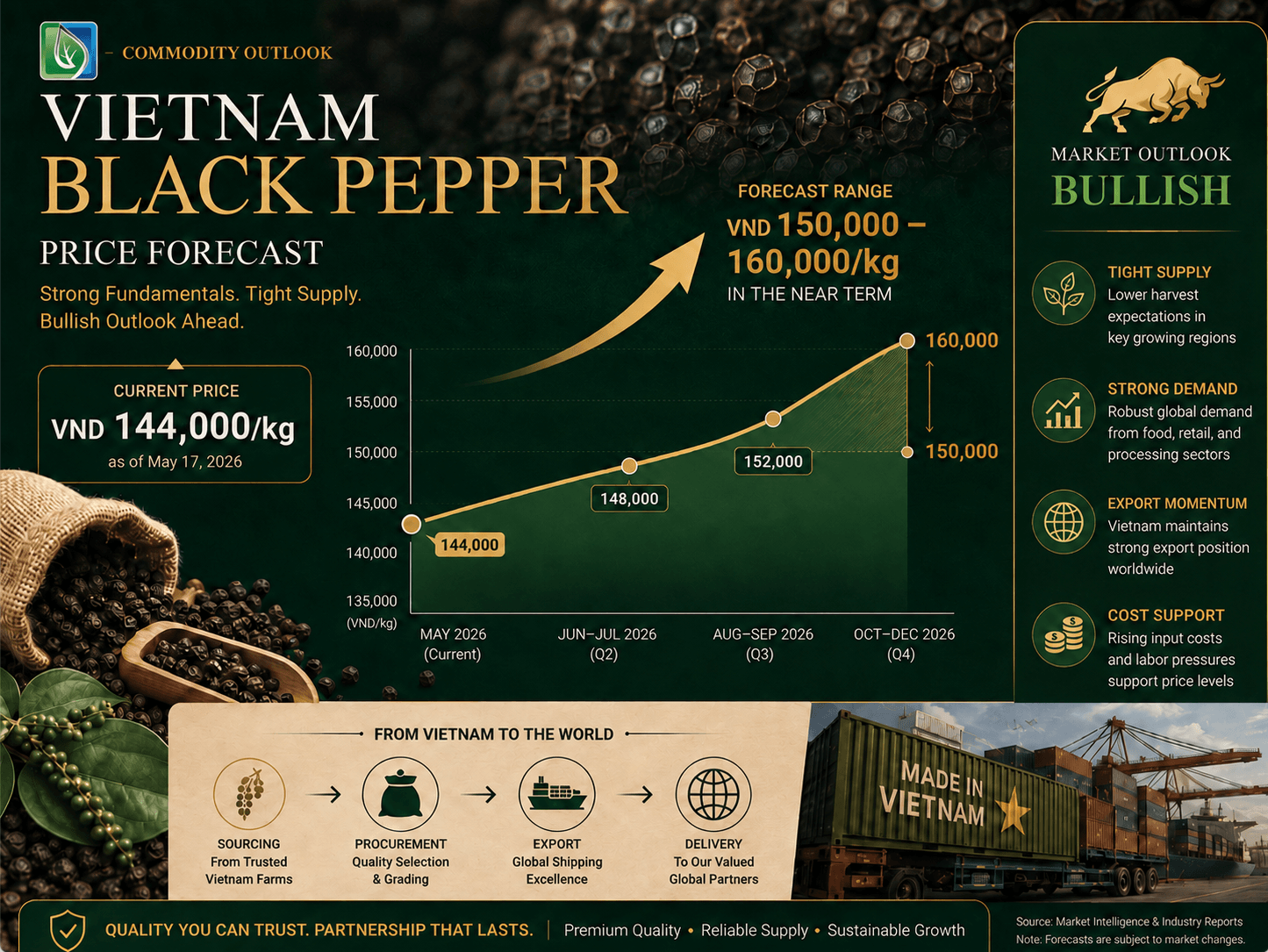
Domestic pepper prices today held stable at VND 144,000 per kilogram, reflecting a market that is consolidating gains after a period of significant upward movement. This price level, while seemingly steady on a day-to-day basis, represents a meaningful appreciation from historical norms and signals a structural shift in the supply-demand balance that has been building for several quarters. The stability at this elevated level is itself noteworthy — in previous years, prices at comparable heights often faced sharp corrections as farmers rushed to sell. That pattern has not materialized this cycle, suggesting a fundamental change in market psychology on the supply side.
Industry experts characterize the current environment as the early stages of a long-term price upcycle, driven not by speculative activity but by tangible supply constraints and sustained international demand. As global supply shortages become increasingly evident across major producing regions, the consensus view among analysts is that the target of reaching VND 150,000–160,000/kg by year-end is well within reach. This forecast is underpinned by several reinforcing factors: historically low carryover stocks, accelerating procurement by exporters ahead of fourth-quarter shipping schedules, and a growing reluctance among farmers to release inventory at current prices when they anticipate further appreciation.
The Supply Squeeze: Inventories at Historic Lows
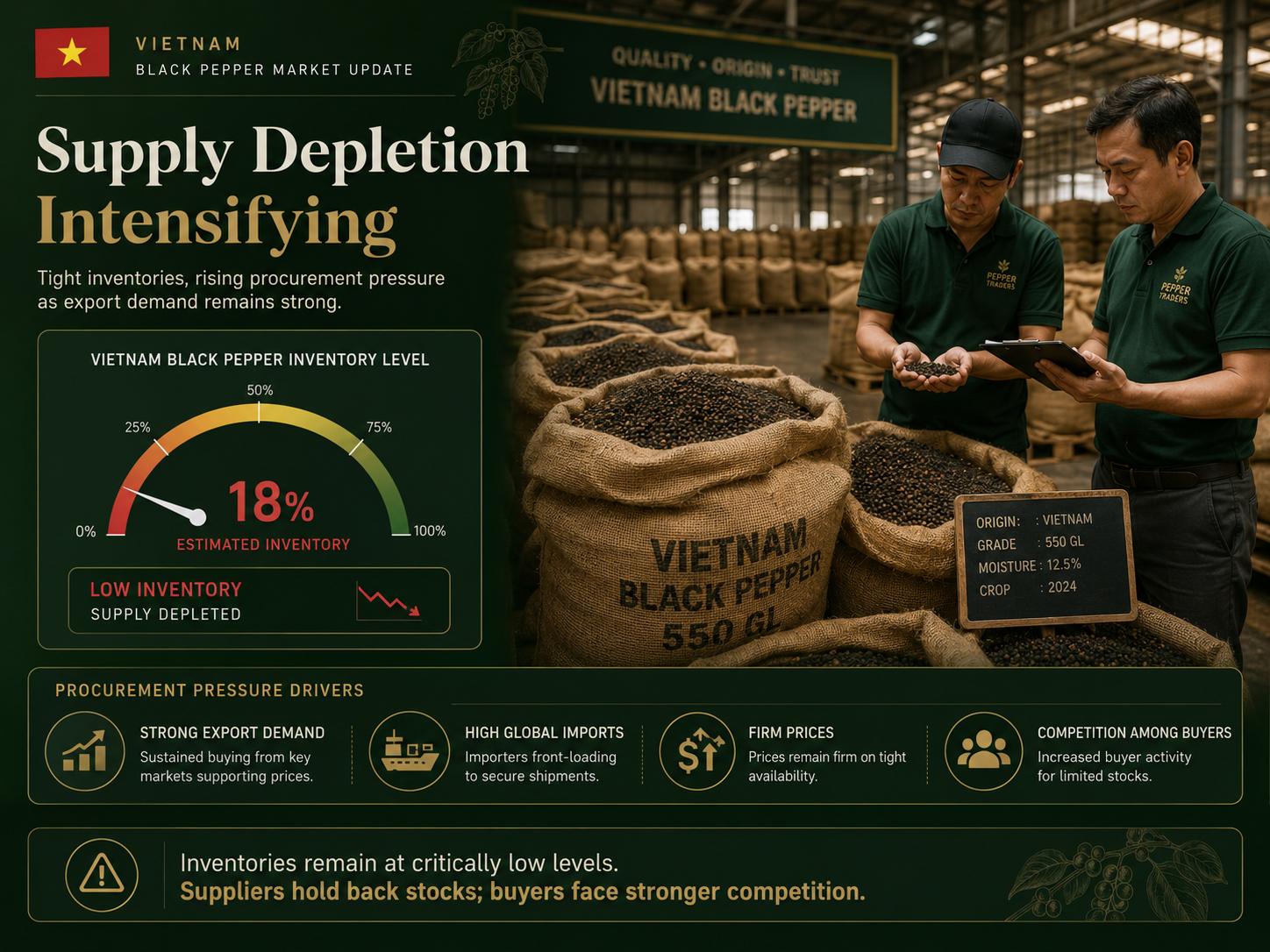
The primary driver behind the sharp rise in pepper prices is the rapid depletion of domestic supply. Carryover inventories entering 2026 are estimated to be at historically low levels, creating a structural deficit that is difficult to reverse in the short term. When stocks are this thin, even modest increases in demand or disruptions to supply flows can trigger outsized price movements — a dynamic that market participants are now actively pricing in.
This inventory drawdown is the result of several converging factors. Strong export demand throughout 2025 and into early 2026 has steadily reduced available stocks. At the same time, production in some growing regions has not kept pace with the draw rate, leaving the supply pipeline increasingly stretched. The result is a market where buyers are competing for a shrinking pool of available product, naturally driving prices higher.
For traders, the inventory picture is particularly significant because it limits the ability of the market to absorb any supply shocks. With minimal buffer stocks, adverse weather, logistical disruptions, or unexpected surges in export orders can all translate directly into price volatility. This is a market environment that rewards proactive procurement and penalizes those who wait for confirmation before acting.
Key Supply Indicators
- Carryover stocks at multi-year lows entering 2026
- Rapid inventory drawdown accelerating through Q1–Q2
- Export orders outpacing available domestic supply
- Farmers holding back product in anticipation of higher prices
- Supply tightness concentrated in key growing regions
Weather Risks & Farmer Behavior
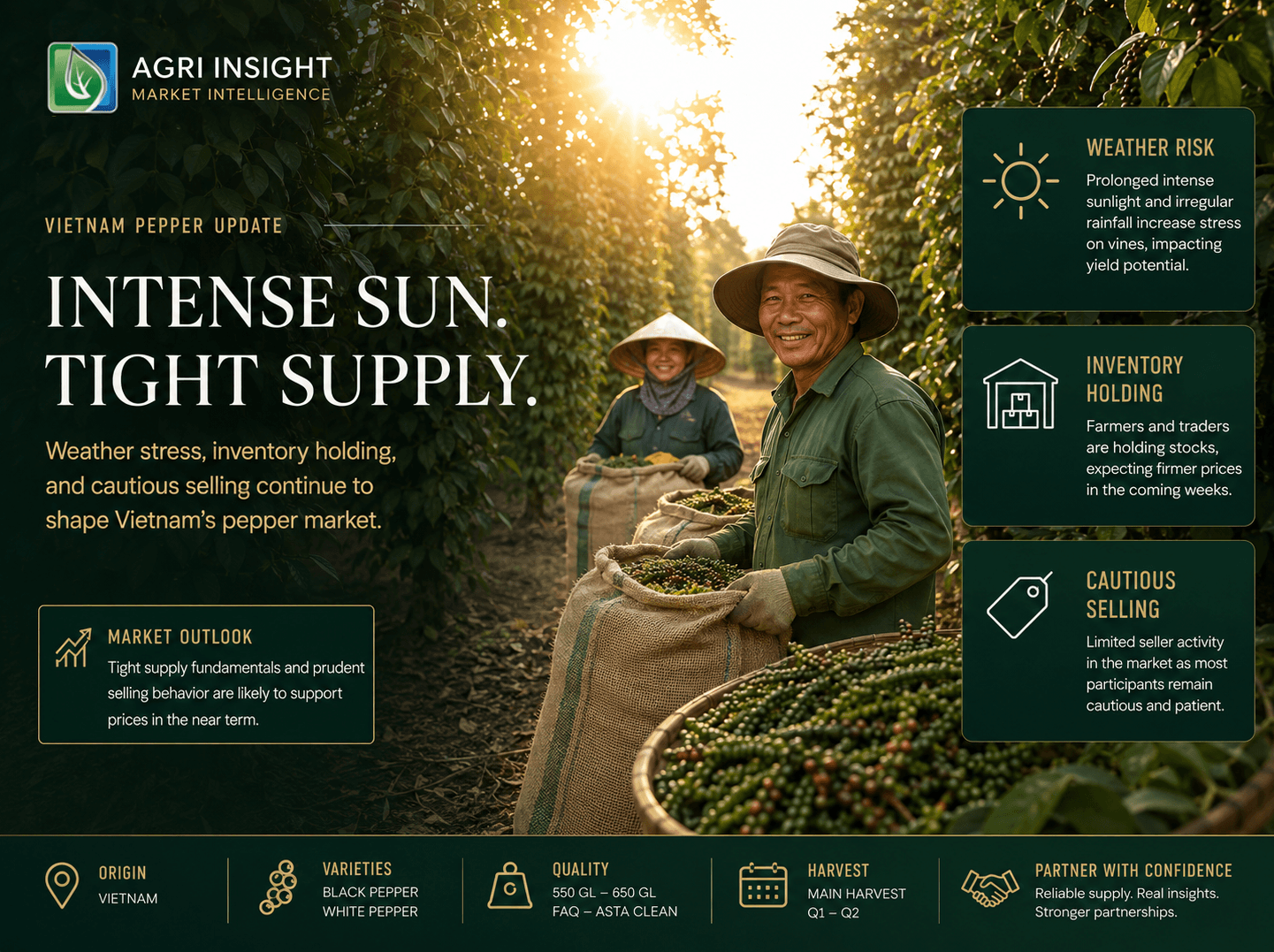
Beyond the inventory picture, prolonged extreme weather conditions are introducing an additional layer of supply risk that is reshaping farmer sentiment and market dynamics. Drought, irregular rainfall patterns, and temperature extremes are not only affecting current crop conditions but are also raising serious concerns regarding next season’s production yields. For a perennial crop like pepper, where production decisions and planting cycles span multiple years, weather-related damage can have effects that persist well beyond a single harvest season.
The impact on farmer psychology has been profound and is directly influencing supply availability in the near term. As a result of both weather concerns and bullish price expectations, farmers are increasingly choosing to hold inventoriesrather than selling aggressively as in previous years. This behavioral shift — a rational response to the signals the market is sending — effectively tightens available supply even further, creating a self-reinforcing cycle of price appreciation and inventory hoarding.
This localized supply tightness is occurring while international demand continues to remain strong, naturally creating upward pressure on prices. The combination of weather-driven production uncertainty and farmer inventory retention means that the supply available to exporters is contracting from multiple directions simultaneously.
Export Performance: A Sector Demonstrating Resilience
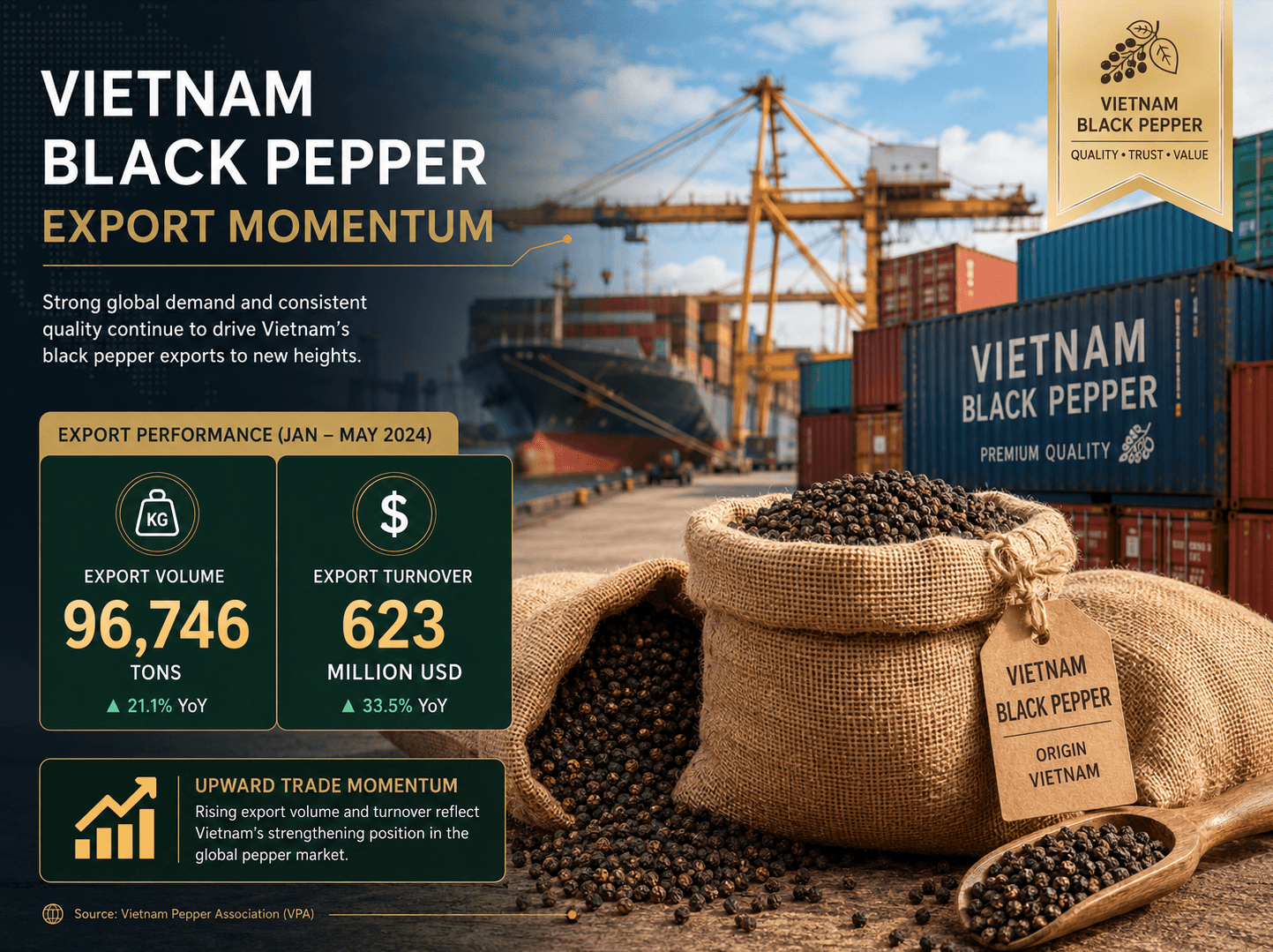
The strong export performance during the first four months of 2026 further demonstrates the sector’s resilience and underlying momentum. Overall, during the early months of the year, Vietnam exported nearly 97,000 tons of pepper with total export turnover approaching USD 623 million, representing impressive growth of more than 31% in volumecompared with the same period last year. These figures underscore the depth of international demand for Vietnamese pepper and the sector’s capacity to deliver even as domestic supply conditions tighten.
The volume growth of over 31% year-over-year is particularly noteworthy given the supply constraints described elsewhere in this report. It suggests that exporters have been actively drawing down inventories to meet international orders, which in turn accelerates the inventory drawdown that is supporting higher domestic prices. The export data and the domestic price trajectory are two sides of the same coin — strong external demand is pulling product out of the system faster than it can be replenished.
The export turnover of approximately USD 623 million also reflects the improving unit value of Vietnamese pepper in international markets. As global buyers recognize the tightening supply picture, they are increasingly willing to pay premium prices to secure supply, which benefits both exporters and, ultimately, the farmers who hold inventory. This dynamic reinforces the bullish thesis for domestic prices, as higher export values create room for domestic prices to appreciate further.
The combination of active international trade and tightening supply conditions provides a solid foundation for pepper prices to maintain bullish momentum through the remainder of 2026. The market is expected to witness further strong upward movements as it enters the year-end peak demand season, a period that historically sees the strongest export order activity and the most intense competition among buyers for available supply.