


2026 // Week 16 – Vietnam Pepper Market : Weekly Briefing – Export Intelligence
Domestic Price Outlook: Narrow Range, Cautious Momentum
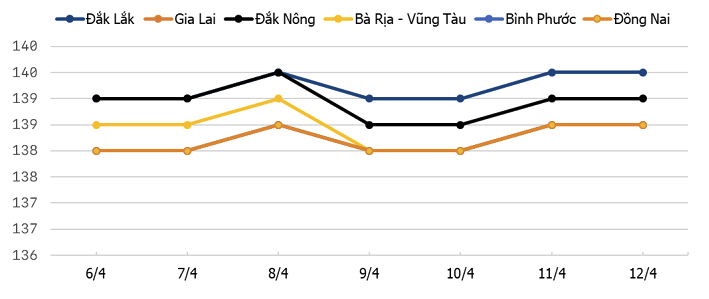
Price trends of pepper in the Central Highlands and Southeast regions during the week from 06-April to 12-April.
Current Price Band
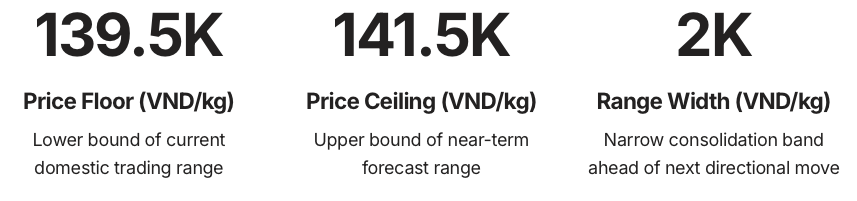
Domestic pepper prices are currently fluctuating between 139,500 – 140,500 VND/kg, reflecting subdued trading activity and cautious buyer sentiment. The tight 1,000 VND/kg spread signals a market in consolidation, with neither buyers nor sellers pushing aggressively for price discovery.
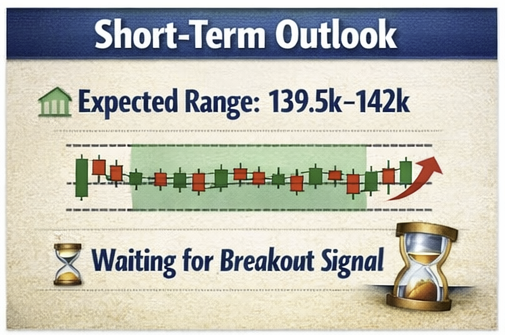
Short-term forecasts point to continued movement within the 139,500 – 141,500 VND/kg corridor before a clearer directional trend materializes. Traders should expect range-bound conditions to persist through the near term, with breakout signals likely tied to export order flow and currency movements.
Vietnam Q1 2026: Export Performance
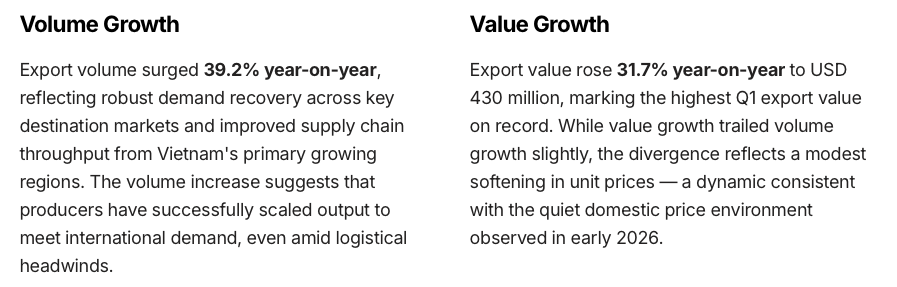
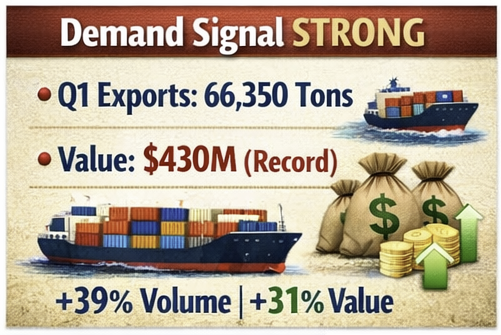
According to preliminary data from the Vietnam Pepper and Spice Association (VPSA), Vietnam delivered its strongest first-quarter export performance on record by the end of Q1 2026. The country exported 66,350 tons of pepper, generating USD 430 million in export revenue — a remarkable achievement that underscores the resilience and growing competitiveness of Vietnam’s pepper sector on the global stage.
Shipping Disruptions: Rising Costs & Rerouted Vessels
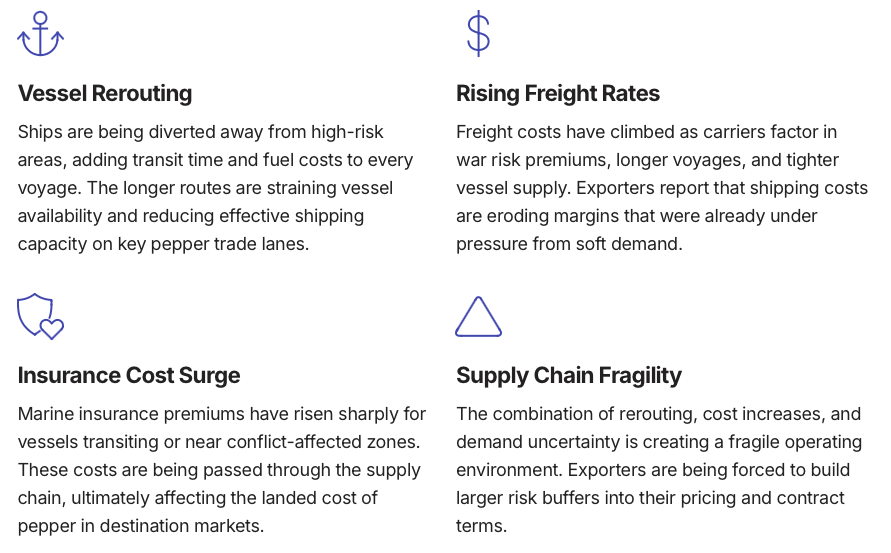
Exporters across the pepper supply chain are confronting a dual squeeze: weakening demand on the buy side and sharply rising logistics costs on the supply side. Vessels servicing key trade lanes are being forced to reroute to avoid high-risk maritime zones, adding significant distance, time, and cost to every shipment. These disruptions are having a measurable impact on exporter margins and are feeding through to pricing dynamics at origin.

The three-phase framework above illustrates how the market is likely to evolve: from the current ceasefire environment where costs remain elevated, through a period of lingering instability requiring active monitoring, to a potential escalation scenario that could disrupt export flows and sharply increase costs.

Espírito Santo: Middle East Exposure & Market Monitoring
Espírito Santo Export Profile
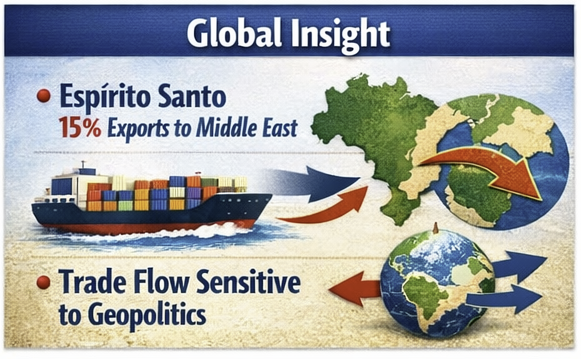
According to data from the Agriculture Department of Espírito Santo, approximately 15% of the state’s pepper exports in 2025 were shipped to Middle Eastern markets. This exposure represents a meaningful concentration risk given the ongoing geopolitical instability in the region and its direct impact on shipping corridors.
Authorities have stated they are closely monitoring developments and analyzing trade data to assess impacts and prepare policy responses amid an increasingly volatile global market environment.
Why Middle East Exposure Matters
The Middle East has historically been a significant destination for Brazilian pepper, with demand driven by both culinary use and re-export activity through regional trading hubs. However, the region’s proximity to active conflict zones means that any escalation directly affects both demand patterns and the logistics infrastructure required to serve it.
With 15% of Espírito Santo’s export volume tied to this market, any sustained disruption — whether from reduced purchasing activity, payment delays, or logistical bottlenecks — could have meaningful knock-on effects for local producers and exporters. The Agriculture Department’s proactive monitoring stance reflects awareness of this vulnerability.