



2026 // Week 31 – Vietnam Pepper Market: Prices Hold at Historic Highs
Domestic Pricing: Stability at Elevated Levels
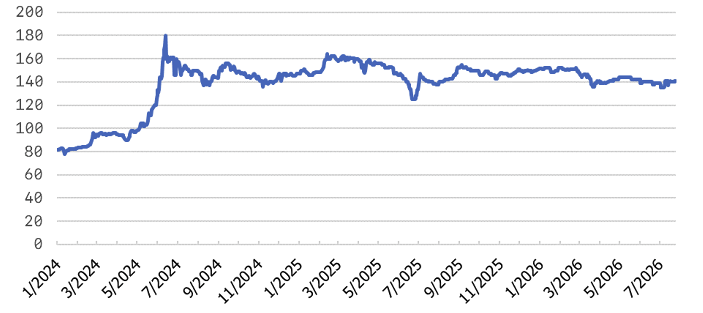
This stability is not a sign of market stagnation — rather, it reflects a market where supply is genuinely tight and where those holding inventory have little incentive to discount. With Vietnam’s harvest having been completed some time ago, the flow of fresh supply into the domestic market has slowed considerably, and pricing power has shifted decisively toward farmers, traders, and processors who retained stock.
Supply Dynamics: Harvest Complete, Power Shifts to Holders
With Vietnam’s pepper harvest now well behind us, the domestic supply picture has shifted fundamentally. The seasonal flush of fresh product that typically enters the market during and immediately after harvest has dissipated, leaving a market increasingly dependent on stored inventory. This transition has profound implications for pricing dynamics and bargaining power across the supply chain.
Farmers & Collectors
Those who held back stock from the harvest are now in the strongest position. With no fresh supply entering the market and international demand remaining firm, farmers with retained inventory can afford to be selective about buyers and pricing. The incentive to hold rather than sell quickly has increased as the year progresses.
Traders & Aggregators
Mid-chain traders who built inventory during the harvest window are now benefiting from the supply squeeze. Their ability to offer consistent quality and volume to international buyers gives them significant leverage in price negotiations, particularly for sterilized, EU-compliant product.
Processors
Processing facilities with existing raw material stocks are operating from a position of strength. However, those who did not secure adequate inventory during the harvest are now facing higher input costs and limited availability, compressing margins and reducing their ability to fulfill new contracts at competitive prices.
International Market: Brazil Harvests, But Quality Gap Persists
Brazil’s Contribution to Global Supply
Brazil’s ongoing harvest is adding a meaningful volume of raw pepper to the global market, providing some relief to the overall supply picture. However, the nature of this supply is critical: much of Brazil’s output consists of raw, unprocessed pepper that does not immediately meet the technical specifications required by premium export markets.
The distinction between raw and sterilized pepper is not merely a processing detail — it is a market-defining gap. European Union importers, in particular, operate under stringent food safety and technical requirements that demand sterilized, fully compliant product. Brazil’s current harvest, while voluminous, does not fully satisfy this specific demand segment, leaving a structural shortage at the quality end of the market.
The EU Quality Premium
European buyers face a particularly acute challenge. The EU’s regulatory framework for spice imports — covering pesticide residues, microbiological standards, and processing certifications — creates a natural filter that excludes a significant portion of raw global supply. Vietnam’s established processing infrastructure and track record of compliance position it as the preferred source for this segment, even at a significant price premium.
This quality gap is the primary reason why global price stabilization has not translated into meaningful price reductions for compliant, high-grade pepper. The market is effectively bifurcating between a lower-priced raw segment and a premium sterilized segment, with Vietnam dominating the latter.
Freight Costs: Easing Index, But Landed Costs Remain Elevated
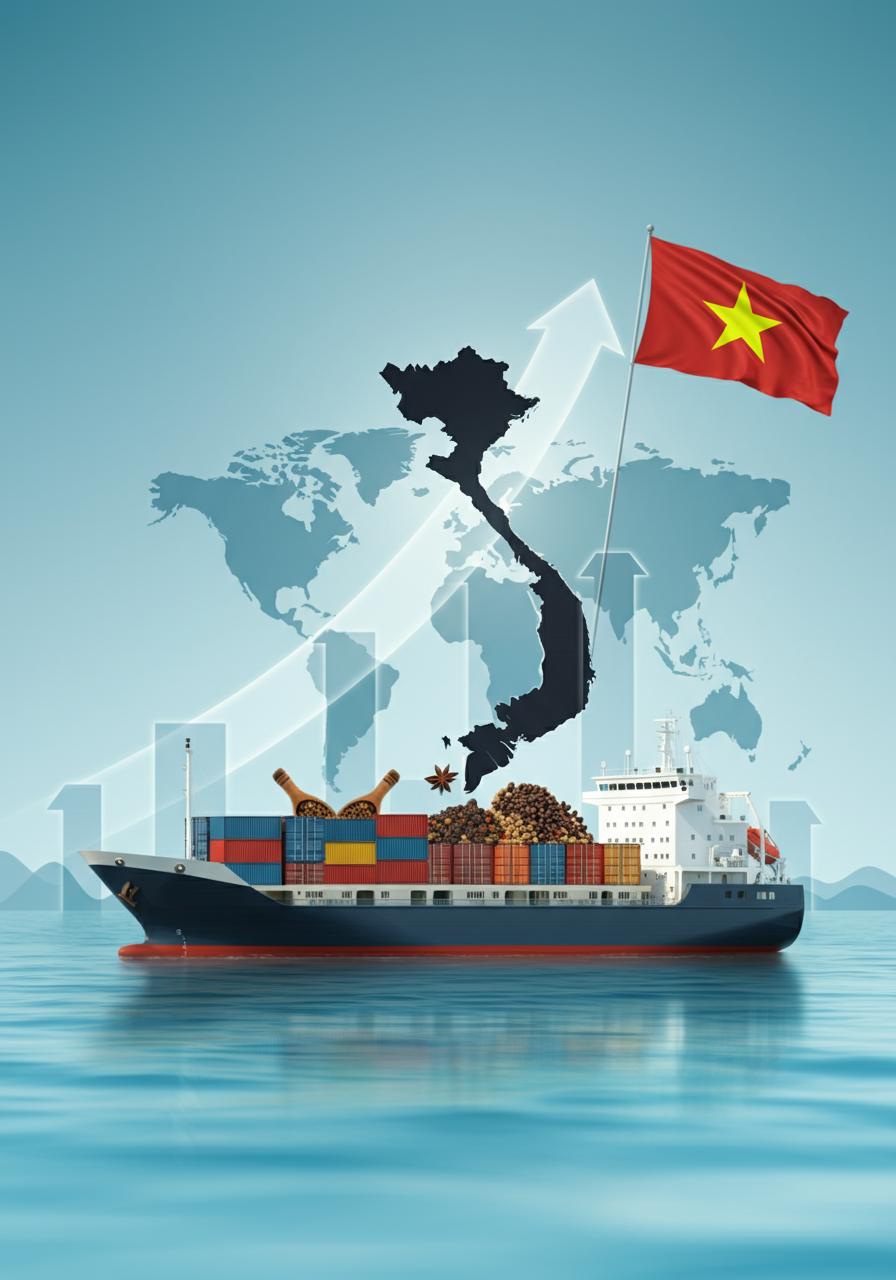
According to Drewry’s World Container Index, ocean freight rates have eased slightly from their recent peaks — a development that might initially appear encouraging for importers. However, the broader picture remains challenging. Despite this modest correction, actual logistics costs continue to run significantly higher than at the beginning of the year, and the cumulative effect on landed costs for pepper importers is substantial.
Drewry Index Signal
Slight easing in ocean freight rates recorded, offering a marginal positive signal for shipping cost trends. However, this index movement has not yet translated into meaningful reductions for spice-specific logistics.
Year-on-Year Reality
Despite the index improvement, actual logistics costs remain significantly elevated compared to the start of the year. The gap between index movements and real-world freight contracts remains wide for agricultural commodity shippers.
Landed Cost Impact
Higher freight costs are directly increasing landed costs for importers, compressing margins and reducing the attractiveness of waiting for better pricing. The total cost of acquisition now includes a meaningful freight premium that was not present earlier in the year.
For importers evaluating procurement strategies, the freight cost environment adds another layer of complexity to the purchasing decision. Even if pepper prices were to moderate slightly, the elevated cost of getting product from origin to destination means that total landed costs are unlikely to fall significantly. This reality further reduces the incentive for buyers to delay purchases in hopes of a better price, particularly when supply availability is also uncertain.
Weather Risk: El Niño Threatens Future Supply

The El Niño Variable
The single largest source of uncertainty for the remainder of the year is the weather. Meteorological indicators point to the potential return of El Niño conditions, a climate phenomenon that has historically had significant and often severe impacts on agricultural output across Southeast Asia and other major pepper-producing regions.
For pepper specifically, El Niño poses a direct threat to flowering cycles and subsequent yields. Pepper vines are sensitive to both temperature extremes and irregular rainfall patterns — both hallmarks of El Niño events. Disruption to flowering during critical windows can reduce not just the current season’s output but also affect the following year’s crop, as pepper plants require consistent conditions to set fruit properly.
Regional Exposure
Vietnam, as the world’s largest pepper exporter, is particularly exposed to El Niño-related weather disruption. The Central Highlands and Southeast regions, which account for the majority of Vietnam’s pepper cultivation, have historically experienced reduced yields during El Niño years. Brazil and Indonesia, the other major producing nations, also face climate-related yield risks under El Niño conditions, though the timing and severity of impacts vary by region.
For market participants, the El Niño risk creates a compelling argument against waiting. If weather conditions deteriorate during the critical flowering period, the supply outlook for 2025 could tighten further, potentially driving prices to even higher levels. This forward-looking risk is already being priced into current contracts by well-informed traders.
Strategic Outlook: The Importer’s Dilemma
Against the backdrop of tight supply, elevated freight costs, quality-driven market bifurcation, and looming weather risk, international buyers are facing a consequential strategic decision. Market analysts are increasingly of the view that opportunities for a significant price correction are limited, and that importers who wait may find themselves in a less favorable position than those who act now.
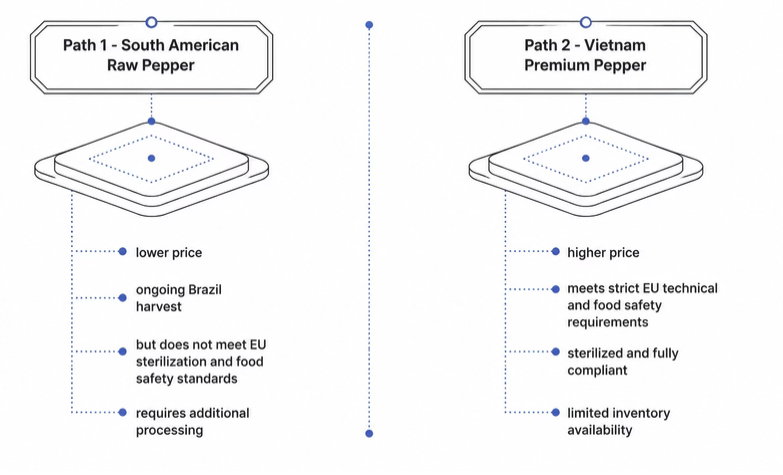
Option A: South American Raw Pepper
Lower acquisition cost and ongoing harvest availability make Brazilian and other South American sources attractive on a price-only basis. However, buyers must account for the additional costs and time required to process, sterilize, and certify this product to meet EU standards. For buyers without established processing relationships or those requiring immediate compliant supply, this option carries hidden costs and execution risk.
Option B: Vietnam Premium Pepper
Vietnam’s sterilized, EU-compliant pepper commands a clear premium but offers certainty of specification, established processing standards, and reliable documentation. For buyers serving regulated markets — particularly the EU — this option eliminates downstream compliance risk and reduces the total cost of getting compliant product to market. Inventory availability is the primary constraint, favoring buyers who move decisively