



2025 // Week 53 – Vietnam Pepper Market Outlook : Stability Amidst Holiday Season.
Current Market : Domestic Price Level
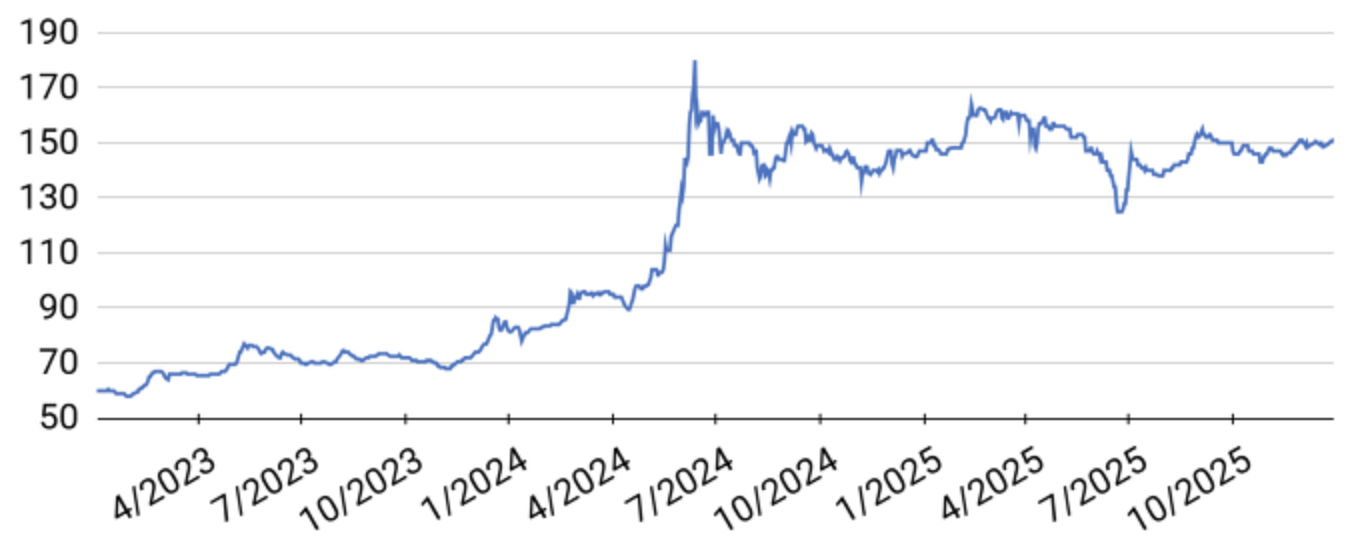
Pepper price developments in the Central Highlands and Southeast from First 2023 to Dec 29, 2025 (Unit: VND/kg)
As the final week of 2025 drew to a close, global pepper prices largely maintained stability. The International Pepper Community (IPC) reported that prices in major producing countries showed minimal movement, a trend attributable to the slowdown in trading activities during the Christmas and New Year holidays. Vietnamese pepper prices, for instance, hovered around 150,000 – 152,000 VND/kg, reflecting this broader market calm.
However, India emerged as a notable exception, experiencing a price increase. This upward trend was primarily fueled by robust domestic consumption and a temporary tightening of short-term supply within the country. This regional divergence highlights localized demand dynamics even during periods of global market quietude.
Looking ahead to the immediate post-holiday period, domestic pepper prices are anticipated to continue their sideways movement at around 150,000 VND/kg. A new phase of volatility is projected for early 2026 as trading activities resume and market participants recalibrate their positions.
:max_bytes(150000):strip_icc()/White-Pepper-Black-Pepper-by-Sommai-Larkjit-EyeEmGetty-Images-a18eb0a24ca4497a8ee3de350d42d770.jpg)
2025-2026 Outlook: Caution and Climate Influence
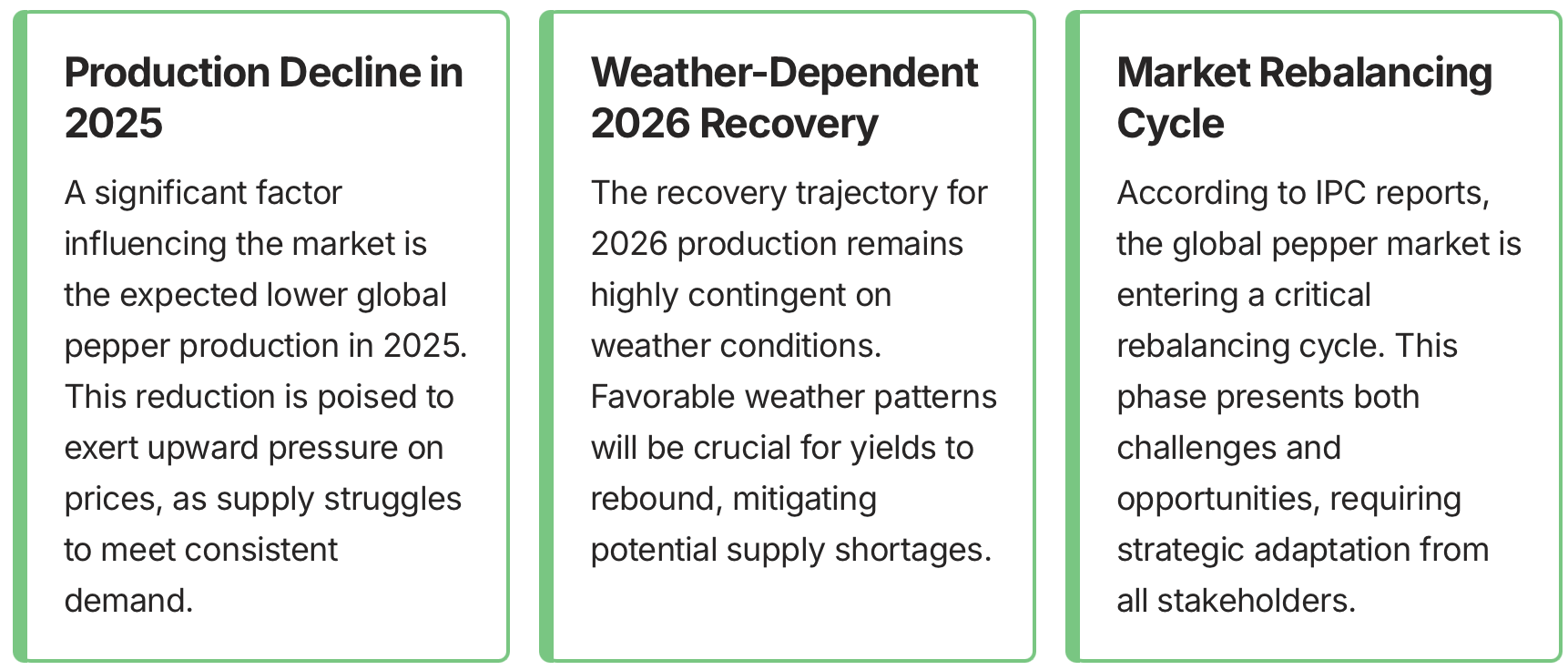
The Industry and Trade Information Center of the Ministry of Industry and Trade (VITIC) echoes expert opinions, forecasting a cautious global pepper market throughout the 2025-2026 period. This caution stems from the interplay of declining production in the immediate term and the uncertainty surrounding future yields, which are largely dictated by unpredictable weather patterns. Market participants are advised to closely monitor these climatic factors, as they will be the primary drivers of supply and, consequently, price movements.
Global Production and IPC Supply Estimates
The supply outlook for 2026 offers a nuanced picture. Global pepper production is estimated at approximately 530,426 tons, a modest increase compared to 2025. However, this figure is still significantly lower than the revised production levels recorded in 2024. This suggests that while some recovery is expected, the market will not immediately return to its previous supply equilibrium.
Coupled with estimated inventories of 205,452 tons, the total global availability of pepper for consumption in 2026 is projected to reach nearly 736,000 tons. Despite this substantial figure, the discrepancy between historical production levels and the forecasted supply indicates a market prone to volatility. This scenario necessitates careful planning for both buyers and sellers to manage potential price swings and ensure consistent availability.
Strategic Imperatives for Producers
In response to the evolving market dynamics, major pepper-producing countries are urged to adopt proactive strategies. These measures are crucial for ensuring stability in supply, mitigating risks, and fostering long-term sustainability within the global pepper trade.
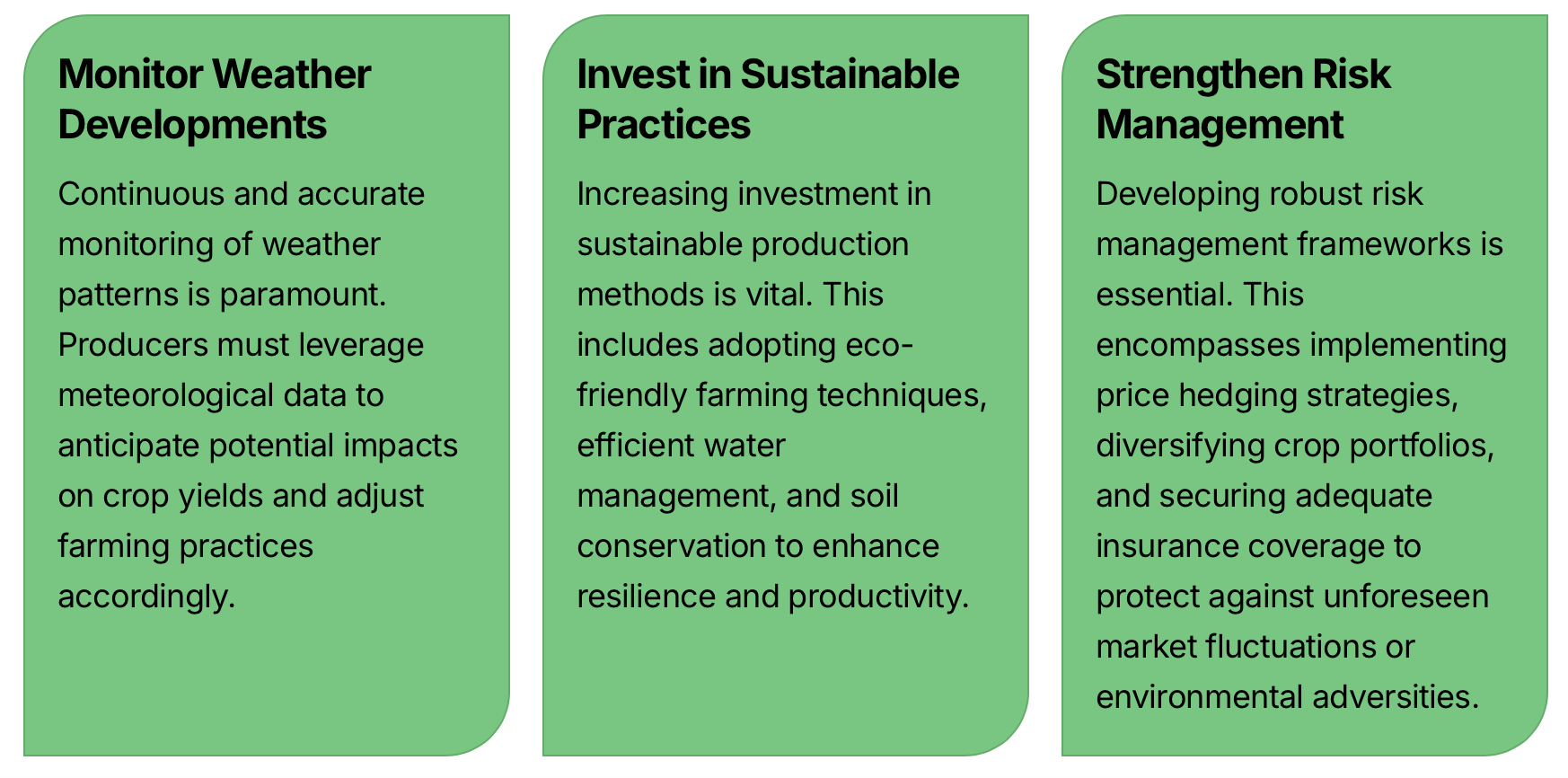
“The global pepper market is at a pivotal juncture, demanding a balanced approach of caution and strategic foresight. Those who adapt to the new rebalancing cycle, focusing on sustainable practices and robust risk management, will be best positioned for long-term success.”
The period ahead, particularly entering 2026, is expected to remain volatile. The interplay of recovering yet below-average production, existing inventory levels, and evolving global demand will create a dynamic market environment. Stakeholders across the supply chain—from growers to traders and consumers—must remain agile and informed.